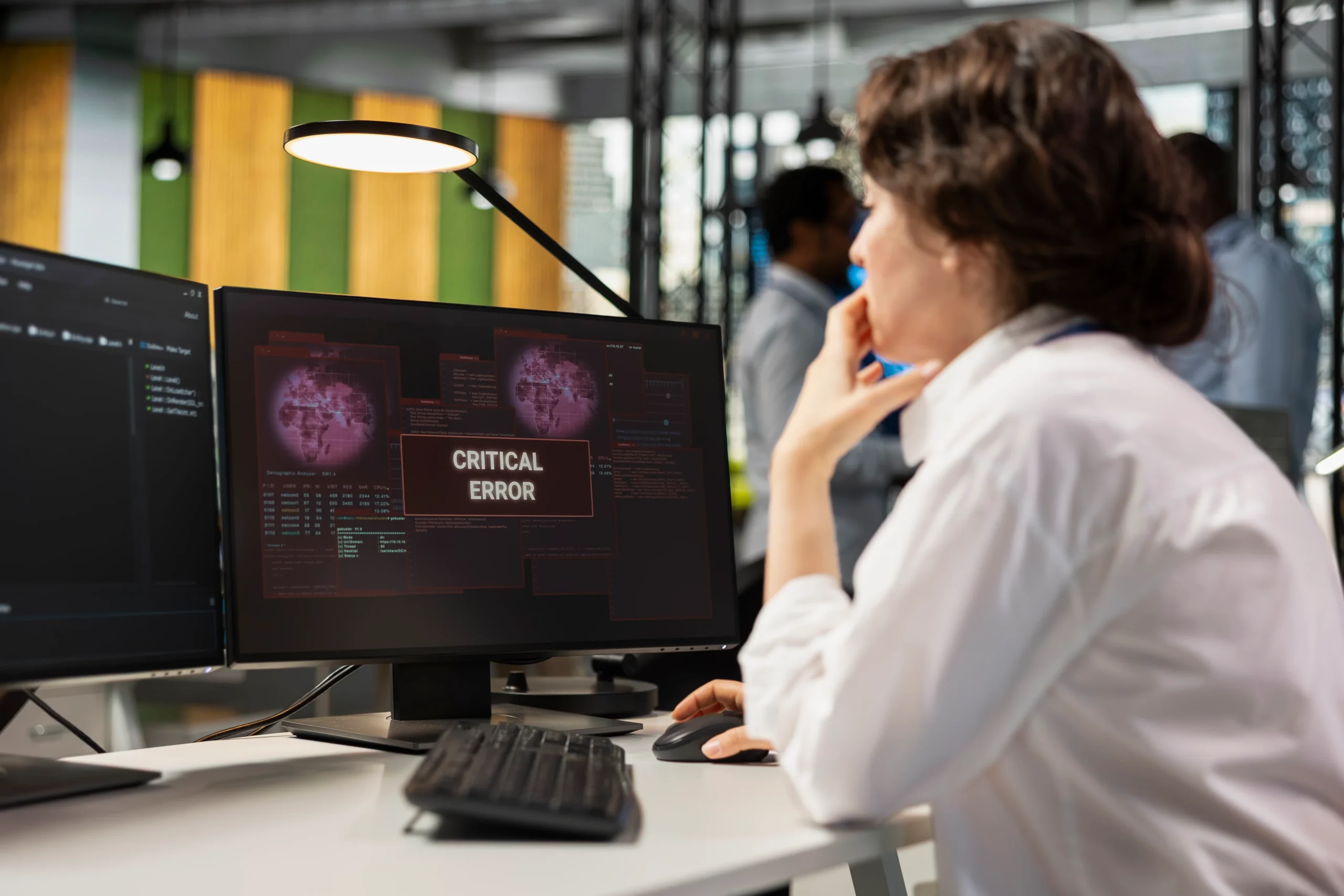

AI is no longer optional in cybersecurity. This article explains how UAE organizations are adopting AI-driven SOCs, why demand is rising, how AI improves threat detection, key findings from adoption studies, implementation challenges, and what the future of AI in security operations looks like in 2026.
Table of Contents
What Is an AI-Driven SOC and How Is It Transforming Threat Detection in UAE?
An AI-driven SOC is a security operations center that uses artificial intelligence and machine learning to automate threat detection, analyze large-scale security data, identify anomalies, and accelerate incident response across enterprise environments.
In the UAE, AI-driven SOCs are transforming cybersecurity by shifting from manual monitoring to automated, intelligence-led security operations. Studies, including findings from Kaspersky, indicate that around 70% of UAE firms plan to establish AI-powered SOCs by 2026 to improve detection accuracy and response speed.
This transformation is changing how cyber threats are detected and handled across organizations.
- Automated Threat Detection: AI-driven SOC platforms analyze network, endpoint, and cloud data in real time to identify anomalies and suspicious behavior that traditional SOCs often miss.
- Reduction in False Positives: Machine learning models filter large volumes of alerts, reducing false positives and allowing security teams to focus on verified threats.
- Faster Incident Response: Response automation enables immediate containment actions, reducing dwell time and limiting the impact of cyber threats.
- Scalable Security Operations: AI-powered SOCs help UAE firms manage increasing data volumes without proportional increases in security staff, addressing talent shortages.
- Enhanced SOC Performance: Continuous learning models improve detection accuracy over time, strengthening overall SOC performance against emerging AI-related threats.
- Integration Across Security Stack: AI-driven SOCs integrate with SIEM, SOAR, and other cybersecurity tools, enabling unified security operations across in-house and cloud environments.
- Cost and Efficiency Optimization: Automation reduces manual workloads and operational costs, although integration costs remain a consideration during initial deployment.
Strengthen your threat detection with
Why Are UAE Organizations Adopting AI-Driven SOC for Threat Detection?
UAE organizations are adopting AI-driven SOC to strengthen threat detection accuracy, reduce response time, and manage increasing cyber threats across complex digital environments.
- Need to Strengthen Threat Detection: UAE firms expect AI to strengthen threat detection by analyzing large volumes of security data and identifying hidden attack patterns that manual systems miss.
- Rising Cyber Threat Complexity: Advanced and emerging threats require AI-driven analysis to detect multi-stage attacks, especially in high-risk environments such as Dubai.
- Faster Identification of Anomalies: AI systems continuously monitor behavior and identify anomalies in real time, reducing detection delays that impact incident response.
- Reduction of Alert Fatigue: AI-driven SOC platforms filter irrelevant alerts, allowing security teams to focus on verified threats instead of large volumes of noise.
- Improved Incident Response Efficiency: Automation enables faster containment and response actions, reducing the operational burden on security teams.
- Scalability Without Workforce Expansion: AI helps organizations scale security operations without proportional increases in headcount, addressing regional talent constraints.
- Data-Driven Security Operations: AI-driven SOC enables continuous learning from past incidents, improving detection models and strengthening long-term cybersecurity posture.
How Does AI Improve Threat Detection and Security Operations in SOC?
AI improves threat detection and security operations in SOC by enabling automated analysis of data, identifying anomalies and suspicious activities in real time, and executing predefined incident response scenarios with higher accuracy and speed.
- Automated Analysis of Security Data: AI processes large volumes of logs, network traffic, and endpoint data to identify anomalies and suspicious activities that traditional security models fail to detect.
- Improved Threat Intelligence Correlation: AI integrates threat intelligence feeds and correlates indicators of compromise, enabling faster identification of attack patterns across systems used by UAE companies.
- Real-Time Anomaly Detection: Machine learning models continuously analyze behavior and data to identify anomalies, improving detection capabilities through automated analysis rather than manual review.
- Reduction in False Positives: AI increases accuracy while reducing false positives, allowing internal teams to focus on validated threats instead of alert noise.
- Response Automation and Execution: AI facilitates response automation by enabling rapid execution of predefined incident response scenarios, reducing containment time during active threats.
- Enhanced SOC Performance: AI capabilities in a SOC improve overall threat detection effectiveness and help organizations move from experimentation to real SOC impact.
- Automation of Routine Tasks: AI automates repetitive security operations such as log analysis, alert triaging, and enrichment, improving operational efficiency.
- Support for Limited Cybersecurity Talent: Given the cybersecurity talent shortage in the UAE, AI reduces dependency on large internal teams while maintaining strong security coverage.
- Adaptation to Emerging AI-Related Threats: AI-driven SOC platforms help counter emerging AI-related threats, including attacks where adversaries exploit AI technologies.
- Scalable Security Across Digital Infrastructure: AI enables consistent monitoring and protection across cloud, network, and hybrid environments in cities such as Dubai and Abu Dhabi.
According to Kaspersky, UAE firms plan AI-driven SOCs because they recognise the value AI can bring to SOCs in strengthening threat detection capabilities through automated analysis and response automation, even as talent and data gaps remain challenging.
What Are the Key Findings from AI-Driven SOC Adoption in UAE?
The key findings show that AI adoption in security operations is becoming a priority in the UAE, but implementation still faces practical barriers.
- UAE firms are actively turning to AI for SOC transformation
- Threat detection is the main expected benefit
- Response automation is a major use case
- SOC performance improvement is a defined objective:
- Implementation remains difficult despite strong interest
- AI talent scarcity is a major constraint
- In-house AI capabilities are difficult to build
on implementing AI-driven SOC in your organization.
What Challenges Do UAE Firms Face in Implementing AI-Driven SOC?
UAE firms face implementation challenges around talent, data readiness, operational integration, and the practical move from AI experimentation to real security outcomes. Kaspersky’s 2026 study says organizations broadly regard artificial intelligence as essential for future security operations, but deployment remains difficult in practice.
- Cybersecurity and AI talent shortages
- Data quality and data gaps
- Operationalizing AI inside the SOC
- Building effective in-house capabilities
- Integration with existing security environments
- Keeping pace with emerging AI-related threats
What Is the Future of AI-Driven SOC in UAE Cybersecurity Landscape?
UAE firms said AI in security operations is moving from early adoption to operational necessity, as cybersecurity is no longer limited to manual monitoring.
- AI-driven SOC becoming the default model: Companies in the UAE are shifting from traditional SOCs to AI-driven environments, where automated analysis of data to identify threats becomes standard across security operations.
- Continuous improvement in threat detection capabilities: Organizations primarily expect AI to strengthen threat detection by enhancing pattern recognition, behavioral analytics, and real-time anomaly detection.
- Automation of routine and complex tasks: AI will continue automating routine tasks such as alert triage and enrichment, while also supporting complex decision-making in incident response workflows.
- Elevation of overall SOC performance: AI capabilities will elevate SOC performance by improving detection accuracy, reducing response time, and enabling consistent security coverage across environments.
- Expansion of AI across security ecosystems: Cybersecurity companies and enterprises are leveraging AI across SIEM, SOAR, and XDR platforms, creating unified and scalable security operations.
- Shift toward intelligence-led security operations: Artificial intelligence-driven security operations will focus on predictive threat detection, using historical and real-time data to anticipate attacks.
- Growing dependency despite implementation challenges: Although organizations face significant challenges such as AI talent being scarce, UAE companies continue investing in AI implementation due to its measurable impact on security outcomes.
- Response to AI-enabled cyber threats: As attackers exploited AI technologies to develop more advanced threats, organizations are adopting AI-driven SOC models to counter these evolving attack techniques.
According to Anton Ivanov, organizations recognise the value AI can bring to SOCs, and this recognition is driving sustained adoption, even as implementation complexity remains a factor in the UAE cybersecurity landscape.
FAQs
1. What is the cost of implementing an AI-driven SOC in the UAE?
Costs vary based on infrastructure, tools, and deployment model. Enterprise SOC transformation typically includes licensing, integration, and staffing, making it a phased investment rather than a one-time cost.
2. Can AI-driven SOC meet UAE regulatory compliance requirements?
Yes. AI-driven SOCs can support compliance with UAE cybersecurity frameworks by improving monitoring, reporting, and incident traceability across regulated environments.
3. Should UAE organizations build or outsource AI-driven SOC capabilities?
Organizations choose based on maturity. Large enterprises may prefer in-house SOCs, while others rely on managed SOC providers to reduce complexity and cost.
4. How long does it take to deploy an AI-driven SOC?
Deployment timelines range from a few months for managed models to over a year for fully in-house implementations, depending on integration complexity and data readiness.
5. How does AI-driven SOC impact business risk in the UAE?
AI reduces risk by improving detection speed, lowering response time, and minimizing exposure to advanced cyber threats targeting critical digital infrastructure.